It’s Not an Ending Until It’s Over

A response to the Daily Prompt: Happy Endings

I had a really hard marriage (won’t go into details… just know it was awful hard) and while I was married I became so distraught I had to find an escape. That escape was my novel “Blue Moon Bench”.

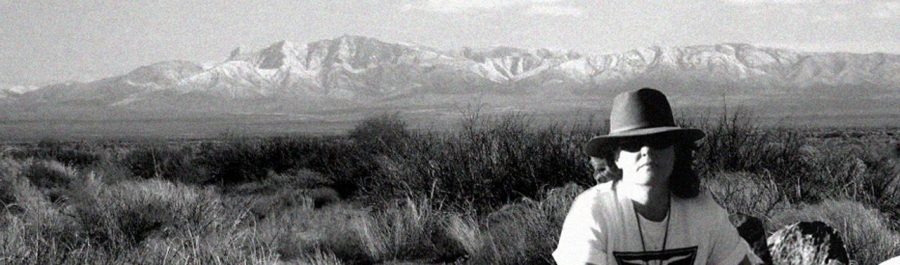
Each day I’d get up (I was a stay at home wife), do housework, chores, errands, then I’d sit down and write on my novel. I was living in Tucson, Arizona where my husbands work took us,  and sorely missed Flagstaff in northern Arizona. So my novel was staged in the place I missed most in the world. Before marriage I’d been in Flagstaff, single, living alone, on the ski patrol, dating three different guys all at the same time trying to decide who to chose as my next boyfriend. I was happy. I mountain biked, hiked, skied, painted (I’m also an artist) and wrote short stories and articles.

So I remember I decided to write about what I loved; Northern Arizona. The beauty, the culture, the Native Americans and their life style and beliefs, about the people I missed giving them new names, and about the mysteries of the southwest right in my previous backyard, the Grand Canyon. I wrote and wrote and wrote until my first novel was over 100,000 words long (in case you don’t know the longest a first novel is recommended to be is 80,000).

My happy ending was when I received that novel for the first time 10 years later in the mail in print! There it was, all those years of work and sweat and belief. Even if no one bought it, it was all wrapped up in that beautiful cover, smelling like new paper and ink, looking beautiful and professional. What a day that was! A very happy ending.

However, I’ve realized that it’s not over yet. I’m having it professionally edited so my embarrassing grammatical/typos go away (I can afford that now).  So stay tuned for the next happy ending: I get to sell it in a real book store and not just online. It’s not an ending until it’s over.

You can read my book here:

Smashwords logoKindle from AmazonBarnes & Noble Nook

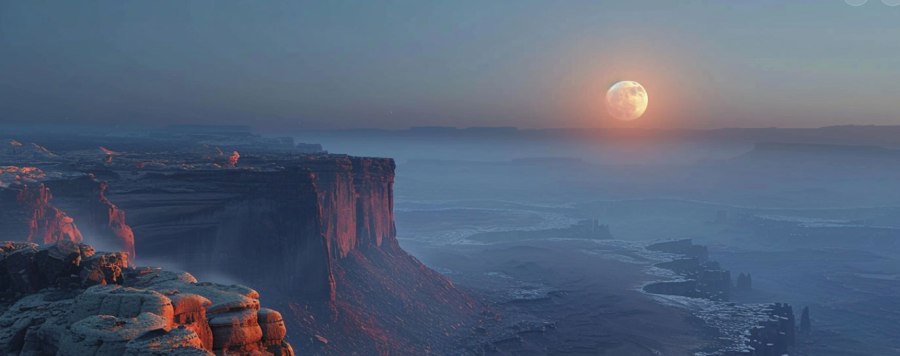
Blue Canyon photo, misty moon setting in the distance

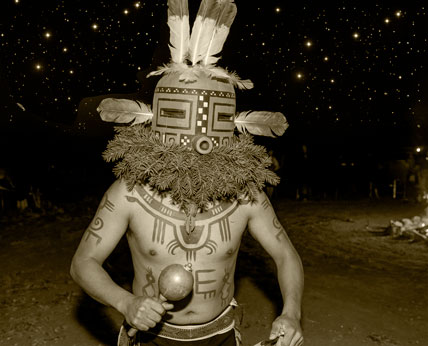
The Hopi Kachina Dances

Culture, Symbolism, and Suspense

In D.L. Blanchard’s Blue Moon Bench, the story opens not with a body or a confession, but with a dance—a sacred ritual in the heart of northern Arizona’s Hopi Reservation.

Against the backdrop of the desert sun, Jessica Dawson, her husband Alex, and their friend Mac watch as the Kachina dancers enter the plaza. What unfolds is more than a colorful ceremony; it is the weaving of culture, symbolism, and suspense into the very fabric of the novel.

For the Hopi people, the Kachina dances are not performance or entertainment. They are spiritual events that carry prayers, blessings, and traditions passed down through centuries. Each dancer, dressed in elaborate masks and regalia, represents a Kachina spirit—beings believed to bring rain, fertility, and balance to life. The sound of rattles, drums, and chants is not just music; it is a language of connection between the physical and spiritual worlds.

Blanchard captures these details with sensitivity, grounding her suspenseful tale in the reality of a culture both mysterious and profound. Jessica, unfamiliar with the dances, feels both awe and displacement. She is a newcomer to the traditions, trying to understand their meaning while feeling the weight of her own insecurities. The vibrant colors and ancient rhythms contrast sharply with the dark undercurrent of danger lurking in the shadows—a stranger in a red cap, a glint of steel, and the sudden realization that she is being followed.

This collision of sacred ritual and mortal threat creates one of the novel’s most gripping juxtapositions. The Kachina dances are timeless, meant to bring blessings to the community, yet they unfold even as Jessica becomes entangled in a very human danger. The crowd, the costumes, the chants—all offer her both cover and exposure. In a sense, the dances become a metaphor for her journey: surrounded by symbols of protection, yet unable to escape the fear of what stalks her unseen.

Beyond the suspense, the dances highlight a universal truth about culture and tradition. To the Hopi, each movement, each mask, and each blessing carries meaning rooted in reverence. Yet, as Mac points out, outsiders often fail to understand this, treating the sacred as spectacle. His warning that the dances might one day be closed to the public resonates as a reminder of how fragile cultural respect can be.

For readers, this scene is more than a backdrop—it’s a reminder of how moments of beauty and community can coexist with fear and uncertainty. Just as Jessica tries to find her footing amid the chants and dust of the plaza, so too do many of us find ourselves balancing reverence for the past with the anxieties of the present.

In Blue Moon Bench by D.L. Blanchard, the Kachina dances stand as both cultural treasure and narrative catalyst. They are not only symbols of hope and continuity for the Hopi but also the stage upon which suspense takes root. Through them, the novel reminds us that even in the most sacred spaces, human vulnerability—and human danger—can find its way in.

A Writers Here & Now

Write Here, Write Now

Be in the present. Let go of the past. Live in today. All those are quotes from meditation teachers who help us let go of our egos and confusion so we can become enlightened. I’m a writer; a Tibetan Buddhist, and I’m working hard at getting my novel published. Is that the same?

Writers used to write great books, submit them to agents hoping to get representation. Or, they would send the manuscript to 50 publishers just to get turned down. J.K.Rowlings the author of the Harry Potter miracle was reportedly turned down by 250 publishers. What if none of them had bought her novel? What if she had given up? And why did so many reject her stories? There is a disconnect in the writers writing what is in their hearts which is often very different; and the publishers being willing to publish only something that is proven to be sellable; and the public wanting something that IS different.

Today, J.K. Rawlings would have probably self-published her novel, not very many would have sold, and the world would have been a completely different place. Her stories have deeply affected the young peoples market, which before almost didn’t even exist. It changed how adults read because they are no longer afraid to pick up a novel for young people and enjoy it.

Or maybe she would have been a best selling e-book. Maybe she would have had a blog and not given up. Maybe she would have stuck with it and written Daily Prompts on WordPress.

Wait, am I J.K. Rawlings? Are you? Aren’t we all just trying to get our stories heard? I love the premise, storyline, characters and outcome of my novel. I love that the main couple are Buddhists that use meditation as a tool to overcome stress and fear. I love that no one else has done what I’ve done; written an adventure novel with romance, murder mystery, history and creativity all in one. It’s a damn good novel, a good read (after the last edit is done of course).

And I’m certain all others who have written novels, or blogs, or poetry feel the same way. Is there room in the world for every thing that is being written today? God, I don’t know. I just know that I’m out there with everyone else trying to offer a great story so they can share in my enthusiastic connection with Arizona, Native American culture and mystery, and romantic adventure with a Raiders of the Lost Ark twist.

And I won’t give up. I am J.K. Rawlings in that way. Write here, write now: and don’t give up.

Midnight & Self Publishing

Stroke of Midnight

The match that lit the candle almost burned out, and then I passed it on to the next person. My candle sat cuddled in my two hands as if I were beseeching it to answer my prayers. “May there be peace on earth, may all beings be well and happy, and may there be an end to war, strife and disasters.” I looked around at the other 70 or so people around me, also engaged with lighting of their own candle. They were also making private prayers. At the stroke of midnight we each get up and offered our candle to the a large and beautiful altar with Buddhist statues, abundant offerings and large, clear crystals.

This is an annual ritual in the Tibetan Buddhist community I belong to. It’s a very different way to spend New Years, and does involve some alcohol, lots of food, but mostly it involves thinking of others. I like that.

So what does that have to do with aspirational prayers for the year? Plain and simple – I’ve written this novel I’ve self published and am trying to do a final edit so I can take it to print. A lot of work. Long ago I promised to offer all proceeds to the temples badly needed renovation (central air and heat, upgraded electrical, new kitchen and plumbing for those living there and for events like this). This year I added a prayer for this novel to be a success so it can benefit that effort. Would you like to help?

Please join me in that prayer so it may help this pure intention inspired by the communities commitment to compassion for so many others throughout the year.

Wanna buy the book? Search for Blue Moon Bench on any major book source such as iBook, Amazon and Barnes and Noble. It’s not been through a last edit, but if you find errors or have any suggestions, just let me know. It’s a great adventure book about interesting and diverse people, including the main couples involvement with Tibetan Buddhism and kindness towards others. Their just American born people like myself, trying to make our way through a life that has difficulty and great blessings bundled together. A murder mystery in the southwest with intrigue, romance and mystery.

Hope your new year is perfect, and that you will be free of suffering.

D L Blanchard

UnPlugged – Letting Go!

Bloggers, Unplugged

What is it like having spent years, literally years, writing a novel you believe in and then having to convince others of it being worthy of their time? Writing and rewriting: copywriting it, creating a cover, getting it ready to ebook publish it, with formatting and hard work; then getting it ready for print. Re-reading it and re-writing it again. And then you have to sweat and labor at trying to get people to read it! Imagine that. I believe in my storyline, my characters, the premise, the motivation. I worked hard. I’m a published author, I’m a good story teller, it has all the elements. And yet… I have to find ways to market it myself. It’s exhausting!

And now… I’m going unplugged!

I lived in northern Arizona for almost 17 years. It was like being on vacation every day. I remember having a window in my shower, and one summer day I came home from a hike, took a shower with the window open. The smell of the Ponderosa pine tree outside the window drifted in along with the warm summer breeze. It reminded me of summers spent with my family on vacation in California. That feeling of expectation is in the novel.

I’d get home from work in Flagstaff and ride my mountain bike before dinner, whizzing up a canyon single track trail to a water tank that all the wildlife used every day. Deer, moose, wild pigs, and small animals like raccoons and rabbits. Sometimes the wildflowers grew so high I could reach out my hand from my bike and swirl their tops as I passed. A friend of mine told a story of how one day as he rode that same single track, a herd of moose came from out the woods and for a few moments he rode with the moose as if he was part of the herd! What a beautiful place. That experience of beauty is in the novel.

It’s all in the novel. The Native American culture, the suspense of the southwest, the beauty of the land and it’s mystery. It’s all in the book. I opened my heart, my imagination, my love for that part of the world to share with others — unplugged.

I’m letting go.

The novel’s sales are intended to benefit the Tibetan Buddhist center which is in horrible need of renovation. The electrical wiring is out of date, the heating system groans, the air conditioning consists of window units in each of the nuns rooms even in 100 degree heat. The kitchen air conditioner just isn’t sufficient enough and it’ always sweating hot there. I wanted to help.

I’m letting go.

Buy the book, don’t buy the book. But I’ll sleep good tonight knowing that I tried every day for years to send people to the website, encourage friends to read it, invite perfect strangers to give it a review on Amazon, Barnes and Noble, or iBookstore so others might be encouraged to read it.

I believe in the novel. I’m letting go of the worry. I believe it will win the interest and gain in popularity. Especially if I pray. I have asked others to pray.

I’m letting go. But I’m not giving up. Read Blue Moon Bench. You won’t be sorry.

Amazon; Blue Moon Bench

Barnes and Noble

On any mobile device just search for Blue Moon Bench Blanchard
And thank you for letting me become a little unplugged. It felt good.

Suspense Novel with Buddhist Characters

When asked why my main characters in Blue Moon Bench are American born Tibetan Buddhist’s, the answer is because we write what we know. I am an American born Tibetan Buddhist and I was interested in making the idea of that less scary for the average reader who might have been brought up Christian, and is uncertain about the whole idea. And for those who find the idea appealing, I hoped they would enjoy reading how other American Buddhist’s live.

Being a Vajrayana practitioner is such a special thing, I also wanted to show how it can work it’s way into a daily life, and how it’s really not completely different than other beliefs that believe thinking of others and compassion as the practice of truth. Jessica and Alex are simple people who use meditation, mantra and practice as a way to reduce stress, and to turn to something higher when you become fearful or things are out of your control and dangerous.

The story is built around Jessica and Alex’s relationship, how they interact as two people very much in love, and how their day to day living turns to something very uncertain very quickly.  Woven within the context of this story is the beauty of the Buddha dharma. I really hesitate to mention prayer, or faith, or religion – because this isn’t a book about religion with a storyline, it’s a book about a story with some religion tucked in.

One thing about the cave at the end (not to much detail here because I don’t want to spoil the story), is that it’s based on a true story. When I first conceived the book, I created a website with the name Blue Moon Bench, a young man contacted me and told me his father was treasure hunter. More about that later, but one of the interesting things this young man shared was the story in the Phoenix Gazette about his father and his adventures did actually say ‘Buddha’ like images were found in this cave in the middle of Arizona! So it was a perfect fit for my story so I wrote it in.

If you’d like to learn more about Tibetan Buddhism and what it’s about, I’d suggest you visit http://www.tibetanbuddhistaltar.org, a website with content written by Jetsunma Ahkön Lhamo, a very high tulku (recognized high Lama choosing to take rebirth in a specific place in the world) and my Root Lama. It’s got some really beautiful and profound teachings, and is rooted in Tibetan Buddhism in the Palyul tradition.

I’m not a teacher, nor did I try to even begin to convey that in the book, and that’s why I kept their practice and beliefs very basic and simple – based on the four basic truths of  Buddhism, things that I know the Buddha taught. I hope when you finish reading the book, the idea of being a Buddhist will feel more comfortable for those who might find it odd, or not American. And for those who have an interest, don’t stop exploring and asking questions. It can change your life. It did mine.

Eh ma ho!

Blue Moon Bench in Print

Good news. I’ve successfully uploaded and set up Blue Moon Bench to be published in print! I’ve just received my first printed copy for proofing, and I can tell you I had tears in my eyes which was a surprise. I think seeing all the hard work in print was such a relief, confirmation that it was really going forward, and the excitement to see the outcome of years of work. It’s not possible, at least for this writer, not to tear up a little.

I’ll post on here where it’s available to order, and hope to see sales soar! I’m confident (ok, that was a pep-talk for myself to not get discouraged).

As I’m doing the last proof read, knowing this is ‘it’, I’m elated and nervous at the same time (is that possible?). The plan is to get the last version to press, I buy a number of copies, and then begin finding local independent book stores to pick up the novel and promote it.

I really believe others will enjoy learning about the story of “What happened that night on Blue Moon Bench.”

Me? I just want to see others enjoy reading it so they review it, and recommend it, and copies sell, and the temple (Kunzang Palyul Choling) benefits from that sale.

Don’t want to wait? Download the e-version on Kindle, iBookstore, Amazon and Barnes & Noble. Just search for Blue Moon Bench Blanchard.

Happy reading!

Asking for Reviews

It’s hard enough to write a book, sweat, worry, rework, rewrite, restructure. Get critiques, hire an editor, and finally you get finished. It takes three years to write, five more to finish edits and all the other things. Then you copyright it, design a cover, create a blog, social media….. you believe in what you’ve done,.. but no one has reviewed it!!!!

Do any of you writers out there have any suggestions on getting your novel reviewed? I’ve had a few friends read the novel, say it’s great, but I haven’t gotten any reviews even on Barnes & Noble, iBookstore, or Kindle.

Reviews….. ahhh … to have some reviews (even negative so I can respond).  Surely other authors have never gone through such stress. I believe in this novel! READ MY BOOK! You’ll love it, I promise.

Then….. write a review.

Thanks

🙂

Serial #1 – The Blessedness of Forgetting

Excerpt from “Blue Moon Bench” -Copyrighted material – use prohibited without written consent of author

Chapter 4: The Blessedness of Forgetting

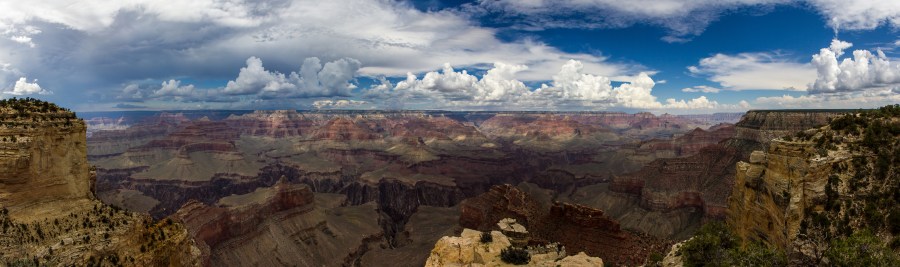
The Rim of the Grand Canyon

The large, long-horned sheep stood perfectly still on the ledge above Mac. The two stared at each other for several seconds before the wild animal spurted up the impossibly sheer wall to disappear behind an outcropping of boulders. It was beginning to turn dusk in the Grand Canyon and Mac wanted to make it to the rim before dark. After his stare-down with the sheep, he again gave his attention to the trail and began his own rapid climb out. His plan was to meet Alex at his base camp above the cave that was receiving Alex’s research group’s undivided attention.

The cave Alex and his team were working on was located high up on a steep wall where it was hidden over the centuries from hikers and explorers. It was a yawning cavern where a large extended family of early natives had made their home deep in the canyon wall. When Mac had last visited the site with Alex, erosion and probably earthquakes over the centuries had sheared off the path into the cave, making it impossible to enter except by repelling down from the top. That was why it had never been found before now. Mac knew that Alex was now trying to beat a deadline that had been set for him by the Smithsonian Institute.

Mac was jealous that the Institute had gotten wind of Alex’s project. Although Mac also had been researching a cave for over a year with much more importance, he was reluctant to reveal it yet to the public. His site needed to be handled with much more delicacy than Alex’s, but he knew he’d one day get more attention for his own find. In his native homeland, there were thousands of sites that hadn’t been discovered yet, and he hoped to one-day return to Australia for that reason. He had little to stay for in the United States anymore.

As Mac negotiated the darkening trail, his mind found a familiar notch of anger. It was a place where Mac got comfort, a place that was easy and safe. He knew how to feel jealousy, oh yes, he knew. He wondered again why the bloody hell Alex always seemed to have everything he always wanted. The bloke had been born with the damn silver spoon in his mouth, and good things just gravitated his way. While Mac always had to fight and claw for everything he had. He felt the familiar flush of temper in his face. But he wasn’t hopeless anymore. No, Mac had a plan.

Stopping on the trail, he zipped open a pocket on his pack and removed a small, highintensity light with a thick elastic band attached. He quickly slipped the band around his head, centering the light in the middle of his forehead, and clicked it on. The light flooded the trail so he could see his out of the canyon. He was almost to the top and the glow of light from Alex’s camp glimmered on the ridge above him.

His thoughts of Alex led him to a further thought. After Rachel’s death, he’d noticed that Alex had wanted to be alone more and more. That’s why it had surprised him when he’d come home with a new bride. While Jessica was a beautiful woman, Mac couldn’t imagine how anyone who had been married to Rachel could even think of trying to replace her. Rachel had been blond and spectacularly beautiful. Jessica seemed nice, but she sure as bloody hell didn’t measure up to Rachel in his mind. Still, Mac thought to himself, that blond-haired, gray-eyed witch had been filled with betrayal. Mac swallowed his anger as he came to the canyons rim. He knew that he had to forget the past, to move on. To pretend like everything was normal until he could wind things up and leave. Then he didn’t care what the bloomin’ lot of them thought, he’d be free.

As Mac came out of the gloom of the evening dusk and into the campfire’s light, Alex turned from something he was packing in the back of his Rover.

“Well, I’m so glad you decided to stay ‘ere tonight to feed an old bloke.” Mac’s Australian accent sounded even more pronounced as it often did after he was away from other people for several days.

“Old, my ass.” Alex said. They both knew Mac had just hiked around fifty of the hardest miles of country anywhere and he knew he look damned fit.

As darkness settled in, all four of the researchers sat around the campfire and ate the meal that had been prepared for them. The students Alex was working with and Mac conversed about what he had found on his hike, and they told him about the newest findings in the cave. Soon Alex joined the discussion, and Mac sat back watching him. In the course of their conversation, he mentioned his parents and Mac thought they would have enjoyed being there in the mix of the conversation, listening to the theories and discoveries. They had always enjoyed stimulating discussions, and no matter how detailed it got, they loved learning more about Alex’s field of study.

Mac’s own parents had died when he was only a tike, and he’d come to America to study anthropology in Albuquerque. He’d always thought Alex’s parents were exactly what his parents would have been like, if they’d lived. Alex’s father had been a cattle rancher for many years here on the plains of northern Arizona. With his private land and agreements with the BLM for grazing rights, his fortune was made early in life, and he married a sweet cowgirl from Winslow. Mac’s own Mom and Dad started out with a small three-room billabong house, and little land, but still they raised cattle from when Mac was an infant.

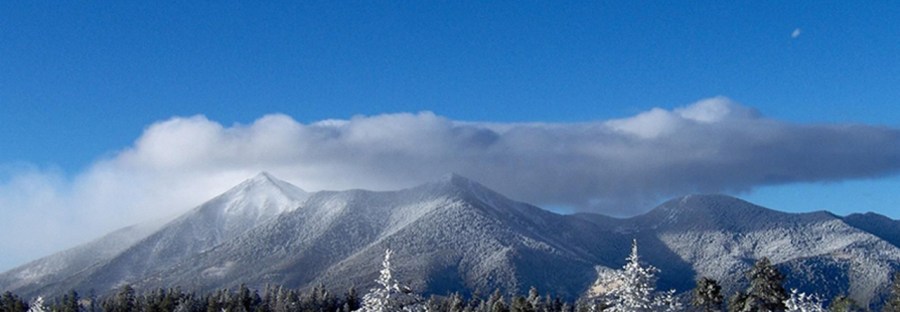
By the time Alex was born, Mac knew that Alex’s family had moved into the two thousand, six hundred square-foot ranch house where Alex & Jessica now lived. The ranch was named “The Monte Vista” after the hotel in Flagstaff where his father won the small original homestead in a private poker game. The name meant “Mountain Vista” in Spanish and there was no doubt that the view of the San Francisco Peaks from the ranch was spectacular. In comparison, Mac’s own home in Flagstaff was close to the university, and by most standards, not modest. But it still wasn’t a ranch.

Mac stretched out his legs and leaned against a rock, staring at the fire. He remembered when he was a young man and he and Alex used to visit his ranch on summer break. Alex’s father used to talk about how the Navajo people would drive the old dirt road to Flagstaff once a month across his ranch. With their wagons full of woven blankets and Yeis’ (the Navajo Kachina dolls) ready for trade, the Navajo families went to trade for flour, sugar and fresh fruits and vegetables — things they couldn’t get out on the reservation. Even today, Mac could still see the line of lava rocks used to mark the road’s track, which still ran parallel with the new highway that still makes its way into today’s modern Flagstaff. He often saw Navajo families driving into town, but now it was on the paved road and their transportation was a pickup truck instead of a wagon. Few had blankets to trade, and they were usually on the way to K-Mart for odds and ends, or a quick stop at the local hamburger joint for fried zucchini and a cheeseburger. Life on the reservation was hard, and most families had either moved into town, or struggled to live on the reservation in small hogans, without electricity or running water. Mac knew that Navajo’s often chose that way of life, however, because the possession of material items went against their religious beliefs. It seemed that life, as a Navajo today was a tug-of-war between being a good Christian and not giving up cultural beliefs of the Navajo rituals.

Mac looked up from his pondering and saw that the two students had finished their coffee and gone off to their respective sleeping bags. He watched as one of them came out of his tent and shook his bedding to check for scorpions or other desert visitors in the folds of the blanket. As Mac and Alex shared the dying campfire, a group of coyotes could be heard off in the distance, and Mac was reminded of when he used to camp out in the desert of New Mexico.

He had been working on his master’s degree in Albuquerque and Alex joined him in the program late. The two would go on long expeditions into the desert, the best of friends, looking for lost cultures and listening to the serenade of the local coyote families at night as they sat around a campfire.

Alex had then taken three years abroad to work with some of the most noted anthropologists in the world, working on digs in South America, Asia, and Egypt, while Mac had stayed in the U.S. struggling to make ends meet. Alex had learned to scale steep cliffs from some of the best rock climbers in the world, and Mac would hear stories at home of how he’d won competitions involving some of the most technical climbs outside the U.S.

By that time, Mac was in Arizona happily publishing book after book on Navajo & Hopi cultural differences, and gaining tenure at the University of Arizona. The two had kept touch over the years and even worked together on a couple of projects that involved ancient sites in New Mexico. During all Alex’s travels, however, Mac knew that he never stopped thinking about his home. He told Mac that he knew he would eventually return to use his knowledge to help research and save the history of native cultures right in his own backyard just as Mac would. And that’s exactly what he had done.

Now, Mac knew that Alex had been flirting with the idea of running for state representative, something a group of local businessmen were supporting. They both knew it would give him the opportunity to do even more for the preservation of Arizona’s history. Alex being nominated seemed like one more morsel served on the Alex Dawson plate. It was something Mac was having trouble getting behind. Mac now remembered that eleven years before, Alex had finally traveled home to stay, bringing with him a new wife, the beautiful Rachel. Alex had told Mac that he’d met her on a ski trip he’d taken with friends in Europe, on a break from work. Rachel was there, training with her team for the Olympics and he had immediately been floored by her beauty and intelligence, which to Mac was completely understandable. Mac understood how two weeks together in such a romantic spot could spelled trouble for a couple. Alex had failed to return to his research in South America, and Rachel had failed to make the team because of her absence at the trials. Somehow, they decided marriage was the only solution for such negligence. Mac supposed that it made sense at the time. He felt the usual black regret in the pit of his stomach. What a mistake it had all been. He felt the familiar anger rise up inside of him, dark and uncontrollable.

Alex suddenly rose, throwing the stub of his cigar into the fire and walking up to the edge of the canyon. Mac watched him as he looked out into the blackness. Looking up at the sky himself, he saw that stars and a small sliver of a moon had come out to give slight illumination to the landscape, sculpting the shapes of the different pinnacles like huge spirits, standing still and quiet in the Grand Canyon’s vast darkness.

To be continued with Serial 2 – Follow this blog
Tears of Compassion

Someone recently asked me what the most gripping scene was in my book; to tell the truth there are several.  But…. this one stands out as the most suspenseful and memorable for me as the writer.  I’ll set it up for you.

Jessica, the main character, decides to take a walk with her dog to find a hidden cave that appears to have gold artifacts, and could be the motive for the murder of Rachel – a murder she suspects her new husband committed. Determined to solve the mystery, she continues to search for the cave.  But so is someone else!

“They arrived at the small cave entrance and the dog became over excited about exploring. Jessica calmed her down, and then pulled out her flashlight so they could both see well in the gloom. The cave was shallow, as she remembered it, and after some scrambling and with the use of the light, she found a cubby hole to one side that she’d missed the first time.

It was about four feet deep and low enough that she had to crawl on all fours to enter. Inside she felt to find a clean metal trunk hidden under a heavy canvas tarp, and a sturdy looking lock protecting the contents. Carefully searching the area, she found a hidden key and was able to unlock the trunk.

Inside the trunk Jessica found an expensive collection of rock climbing gear. The equipment looked like the same kind Alex used to climb, and it was in good condition. She carefully closed the trunk, snapping the lock closed and re-draped the canvas tarp. Carefully returning the key to its hiding place, she decided it probably belonged to a Navajo who liked to climb as recreation here on the reservation, and left it here for convenience.

Jessica slipped on her rain jacket against the light rain that had started outside and then securely wrapped Chili’s leash around her wrist. Discouraged that her investigation had been fruitless, they began the walk back up the trail. Once again a trickle of sand and small pebbles showered down on them, and this time she had a strange feeling that someone was above them. Both she and Chili stood perfectly still, listening for any other sounds, but soon moved on after hearing only the wind and a hawk far down the canyon.

Just before they reached the top of the trail, Jessica heard the angry buzz of a bee off to her right. She made a rapid swat at it and then tried to pick up their pace, wanting to reach the rim before it began to rain in earnest. Chili stopped on the trail, however, and lifted her head, her ears perked and listening. Jessica gave her leash a tug, and another buzz went by her ear, but this time closer, with a strange crack immediately after it.

Just as she realized it was a rifle shot, Chili let out a loud screaming yelp. Jessica whipped around in time to see the dog catapult into the air, jerking at the end of the leash hard enough to tumble over the edge of the cliff!

Jessica hit the ground to duck away from any more bullets and then looked around her. She could see no one above them. Chili was now hanging suspended over the canyon with nothing but Jessica’s strangle hold on the leash standing between her and a plunge to death. She crawled over to the edge while trying to keep the leash secure. Poor Chili was crying horribly, and twisting in the air, her harness firm and strong. Jessica was relieved to see that the dog was suspended above a small ledge right below them.

“Hold on girl,” she said trying to reassure the struggling dog. She began an earnest prayer quietly under her breath, tears of compassion spontaneously welling up in her eyes.

The leash painfully cut into her wrist as she tried to lower Chili onto the ledge. Lying on her stomach, she extended her arm as far as possible and still came up short, dust and dirt invading her eyes and mouth. Her arm was beginning to give out from holding all the weight of the wildly squirming dog, but she knew Chili might be hurt worse if she let go. Even if she landed safely, there was no guarantee the wounded dog wouldn’t run off the edge of the canyon in confusion without Jessica there to stop her.

The shooter forgotten as she edged further over the lip of the canyon, sweat popped out on her forehead and she extended the reach of the leash now growing slippery with perspiration. The sound of the dog in pain was almost too much for Jessica as she strained to stretch over the rim further wanting Chili’s landing to be soft. She suddenly felt herself start to slide headfirst into the canyon, tears blurring her sight.

Right before she went over the lip of the ledge, she tried to grab at a small tree that had rooted next to her, wanting to save the dog a hard landing at any cost. The tree couldn’t hold her weight and she went over sideways, landing hard right next to Chili, her legs dangling over the edge. Her shoulder took all the impact and the pain was so intense she almost blacked out.

Lying for a several seconds, stunned, Chili’s pitiful whine made its way into the fog of her own pain. She looked over and grabbed the collar to prevent the wounded dog from moving, the ledge only about four feet wide, about 12 feet below the rim with very little room to maneuver. The vast space of the canyon was simply an inch away and it gave her intense vertigo. She immediately sat up and pulled herself away from the edge as much as possible. Leaning her back against the canyon wall while still holding Chili’s collar, she closed her eyes, continually repeating the auspicious prayer, her perfect faith rooted in the ancient practice. A miracle was needed.

Once she gained a little space in her mind, she was able to give Chili a closer look and saw that the dog was lying on her side, her breathing rapid and shallow. Inspecting Chili’s wound, she was rewarded with a piercing yowl as the dog tried to jerk away. The bullet had gone through the fleshy part of the neck and out the chest. She soothed the dog into laying still, her compassion for her pet enormous, and she was calm with the conviction that it would not end here. She just wouldn’t let it.

“Shhh. It’s OK Chili. Don’t worry,” she said, petting her ears back, planting a kiss on her forehead, her own tears mingling with dust and blood. She suddenly grew still wondering who had shot them, and would they shoot again.”

New Series to begin soon. Follow this site and read more free!

Download the book at Barnes and Noble, Kindle and Amazon ; Search for Blue Moon Bench – Blanchard

Printed version coming soon!


Enjoy!