

Sunset in the desert with a large rock in the foreground carved with ancient symbols

Spirits, Shaman, and Shadowy Figures 

Some stories thrive on logic and fact, others blur the line between reality and the unseen.
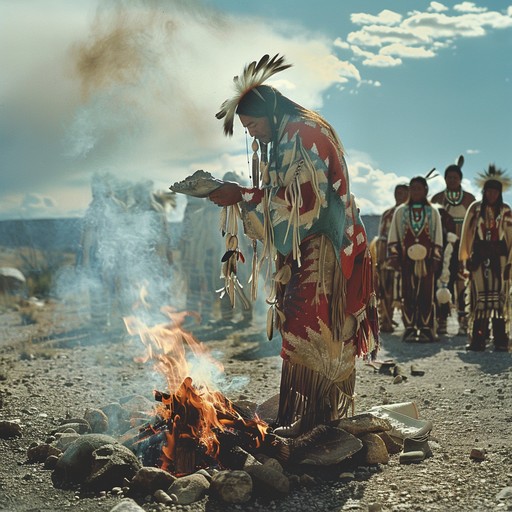
In D.L. Blanchard’s Blue Moon Bench, the mystery of Rachel’s death is layered not only with human motives but also with whispers of the supernatural. Spirits, shamanic presences, and shadowy figures appear throughout the novel, deepening both its suspense and its exploration of belief.

 Jessica, new to Arizona’s desert world, is already unsettled by her role as Alex’s second wife and by the unanswered questions surrounding Rachel’s fate. But what unsettles her even more is the sense that the world she has stepped into does not operate solely on reason. She feels presences—echoes of spirits that seem to haunt both her new home and her new marriage. At times, it is difficult to tell whether these apparitions are real or whether they spring from her own anxiety. Either way, the effect is chilling.

For readers, these moments resonate because they reflect a deeply human truth: when we are already afraid, the shadows seem to take on a life of their own. Anyone who has walked into a darkened room after loss or betrayal knows how the imagination fills in the silence. Jessica’s experiences make her more vulnerable, more human, and more relatable.

The shaman figure, too, adds a layer of both mystery and wisdom. Representing knowledge outside the realm of science or anthropology, the shaman becomes a bridge between the seen and the unseen, reminding characters that not all truths can be measured or proved. This presence highlights one of the book’s central themes: spirituality is not bound by labels. Just as the Hopi Kachina dances carry meaning beyond performance, the shaman represents the possibility that truth lives in places science alone cannot reach.

Then there are the shadowy figures—ambiguous, threatening, and never fully revealed. They stalk Jessica in alleys, appear at the edge of crowds, and seem to vanish as quickly as they arrive. These figures serve as metaphors for her inner fears but also as tangible threats that move the plot forward. Are they flesh-and-blood pursuers with sinister motives, or are they manifestations of her doubts and suspicions? Blanchard deliberately blurs the line, leaving the reader to sit in the same uneasy uncertainty as Jessica herself.

What makes this blend of the spiritual and the mysterious so compelling is how it mirrors real life. We may not all encounter shadowy figures on desert trails, but we all know what it feels like to be haunted—by grief, by memory, or by choices left unresolved. The idea that unseen forces, whether spiritual or psychological, shape our lives is one that resonates across cultures and beliefs.

In Blue Moon Bench by D.L. Blanchard, spirits, shaman, and shadowy figures are not decorations on the story—they are essential to its power. They remind us that truth is rarely simple, and that sometimes the most profound answers lie in the spaces where faith, fear, and mystery intersect.

Blue Canyon photo, misty moon setting in the distance

When Friendship Turns Deadly

How Trust Can Twist into Betrayal

Friendship is meant to be a safe place—a bond of trust, loyalty, and shared history. But what happens when friendship becomes the very thing that threatens to unravel everything?

In D.L. Blanchard’s Blue Moon Bench, the triangle between Jessica, her husband Alex, and his longtime friend Mac shows how quickly trust can twist into betrayal, turning companionship into a dangerous game.

Alex and Mac share more than just professional ties as anthropologists. They share years of history, travel, and discovery. Their friendship is built on common passions, yet it is complicated by something far more personal: Rachel, Alex’s late wife. Her mysterious death haunts both men, but in very different ways. For Alex, Rachel is a memory he cannot fully release. For Mac, she is a wound that festers—part loss, part jealousy, part unresolved desire. Into this tangled web steps Jessica, who becomes both participant and witness to a friendship straining under the weight of secrets.

At first, Mac presents himself as a protector. He warns Jessica of dangers she cannot yet see, hints that Rachel’s death was no accident, and suggests that Alex’s alibi may not be as solid as it seems. His words shake her, but they also leave her uncertain. Is Mac truly looking out for her, or is he using her vulnerability to drive a wedge between husband and wife? The ambiguity is unsettling—much like real life, where not every friend who claims to protect us is free of hidden motives.

Jessica’s struggle is deeply human. Many readers will recognize the unsettling moment when a friend or confidant plants doubt, forcing them to question who they can trust. She wants to believe in her husband’s integrity, yet Mac’s sincerity feels convincing. The very foundation of friendship—trust—becomes the weapon used against her.

The tragedy of this triangle lies in how loyalty collides with resentment. Alex, wrapped in silence about his past, sees Mac as a companion, even if sometimes a difficult one. Mac, however, sees Alex as a rival who has always had the advantage: wealth, love, and recognition. The simmering jealousy underneath their friendship eventually leaks into every word, every sideways glance, every carefully timed comment.

Blanchard captures how fragile friendships can be when tested by grief, love, and ambition. The bond between Alex and Mac might once have been genuine, but the intrusion of Rachel’s death and Jessica’s arrival tips the balance. What was once companionship becomes rivalry, and what was once trust becomes suspicion.

In Blue Moon Bench by D.L. Blanchard, the friendship between Alex, Mac, and Jessica serves as a warning that not all bonds can survive betrayal. It reminds us that friendship, like love, demands honesty—and when honesty is replaced with secrecy, even the strongest ties can snap. For Jessica, the realization that a trusted friend might be an enemy is more than unsettling. It is life-threatening.

Friendship can be a lifeline. But as this story shows, when jealousy, grief, and desire creep in, it can also become the deadliest trap of all.

Shadows in the Grand Canyon 

The Grand Canyon is One of the Most Awe-Inspiring

Its vast cliffs and winding gorges draw millions each year, eager to stand on the rim and gaze into the silence of geologic time. Yet in D.L. Blanchard’s Blue Moon Bench, the Canyon is more than a marvel of nature—it is a character in itself, a place where shadows conceal secrets and tragedies refuse to stay buried.

A photo of the Grand Canyon at sunset

Rachel Dawson’s mysterious death, officially dismissed as an accident, casts its longest shadow here. Found at the bottom of the Canyon, Rachel becomes forever tied to this landscape of beauty and danger. For those left behind—her husband Alex, his new wife Jessica, and their friend Mac—the Canyon is no longer just a national treasure. It is the silent witness to a crime that may never be fully understood.

Anyone who has visited the Grand Canyon knows the way light and shadow play across its walls. Morning sun paints the cliffs gold, while evening casts them in violet gloom. In the novel, those shifting shadows mirror the uncertainty surrounding Rachel’s death. What appears clear and brilliant one moment fades into obscurity the next. Was Rachel’s fall simply an accident? Or does the Canyon hold proof of something darker, something carefully hidden?

Jessica, an outsider to this desert world, feels the Canyon’s weight acutely. As she learns more about Rachel’s final night, the Canyon becomes more than a place on the map—it becomes a symbol of her doubts. Its sheer cliffs remind her of the precariousness of trust. Its silent depths echo her unanswered questions. For readers, this connection is strikingly human: how often do we link places to memories, both beautiful and painful? A favorite park, a childhood home, or even a quiet street can become forever tied to what we experienced there. For Jessica, the Canyon is inseparable from fear, suspicion, and loss.

Mac, too, sees the Canyon in symbolic terms. As an anthropologist, he marvels at its hidden caves and ancient dwellings. But his jealousy of Alex and his fixation on Rachel taint even the Canyon’s grandeur. He speaks of it with reverence one moment and bitterness the next, as if the very rocks hold proof of betrayal. In this way, the Canyon reflects not only the external mystery, but also the internal conflicts that drive the characters.

Blanchard’s choice to anchor the story in this iconic landscape is powerful. The Grand Canyon is timeless, but it is also perilous. Its beauty draws people in, even as its depths remind them how fragile life is. In Blue Moon Bench by D.L. Blanchard, the Canyon is not simply scenery—it is a keeper of secrets, a reminder that shadows can hide both danger and truth.

For those who have ever stood at its rim, the Canyon can feel humbling, even unsettling. In the novel, that same humbling force becomes a crucible for mystery, love, and betrayal. The shadows in the Grand Canyon are not just geological—they are human, cast by the lives and choices of those who dare to stand at its edge.

The Clever Coyote

Symbolism of Trickery and Deception

Few animals carry as much symbolic weight in storytelling as the coyote. To the Hopi and many other Native peoples, the coyote is not merely a desert creature—it is a trickster, a teacher, and sometimes a warning.

In D.L. Blanchard’s Blue Moon Bench, the image of the coyote threads through the narrative, embodying the danger and duplicity lurking just beneath the surface of seemingly ordinary lives.

The coyote is cunning, adaptable, and unpredictable. It slips between worlds—wild and domestic, sacred and profane—without belonging fully to either. This dual nature mirrors the human characters who carry secrets, shift allegiances, and wear masks of their own. When Jessica finds herself entangled in the mysteries surrounding Rachel’s death, she is not just confronting grief or jealousy—she is navigating a landscape where truth itself is elusive. Like the coyote’s howl echoing through the desert, deception calls out in the shadows, never revealing its true source.

Mac, Alex’s old friend and fellow anthropologist, is one of the clearest embodiments of the coyote spirit in the story. At first, he appears as a trusted companion, offering Jessica comfort, knowledge, and even warnings about the dangers around her. But his words are riddled with ambiguity. Is he protecting her, or manipulating her fears for his own ends? Like the trickster, he thrives in the in-between, never fully trustworthy, yet impossible to dismiss.

Jessica herself begins to sense the coyote’s presence in her own heart. She wrestles with jealousy toward Rachel, doubts about Alex’s past, and her own ability to see clearly through the haze of uncertainty. In moments of fear or suspicion, she realizes that trickery does not always come from others—sometimes, it comes from the stories we tell ourselves to make sense of what we cannot understand.

On a human level, the coyote represents the struggle we all face with truth and illusion. How often do we deceive ourselves about the people we love, or fail to see what is right in front of us because it is easier to believe in the mask? In the novel, Jessica’s battle with trust mirrors this universal challenge. To survive, she must learn to see past appearances and recognize the trickster at work—not only in others, but in her own doubts.

Blanchard’s use of the coyote is more than cultural symbolism—it is a reminder that deception, whether playful or deadly, is part of human life. Tricksters exist in every culture because they reflect the complexities of our own hearts. They remind us that not everything is what it seems, and that wisdom often comes only after we’ve been fooled.

In Blue Moon Bench by D.L. Blanchard, the clever coyote is not just an animal on the mesa. It is the shadow in the story, the whisper of doubt, and the symbol of every half-truth that threatens to unravel Jessica’s fragile world. Through it, readers are reminded that deception may be dangerous—but it is also the path to discovering truth.